- CEOs Who Didn’t Just Lead Companies — They Changed the World
- 1. Satya Nadella — Microsoft
- 2. Mary Barra — General Motors
- 3. Paul Polman — Former CEO, Unilever
- 4. Renat Heuberger — Terra Impact Ventures / South Pole
- 5. Ndidi Okonkwo Nwuneli — One Campaign & African Food Changemakers
- Common Themes, Lessons From These CEOs
- Real-Data Challenges & Where Progress Is Mixed
- Why These Stories Matter for You (Yes, You)
- Conclusion
CEOs Who Didn’t Just Lead Companies — They Changed the World
We often measure CEOs by how much profit they generate, how big they make their firms, or how many products they launch. But some go further: they shift culture, drive sustainability, push social good, reimagine what business can be. These are the kinds of leaders who make “legacy” a lived word. Here are some CEOs who have brought real change — with data, with courage, and with real impact.
1. Satya Nadella — Microsoft

What changed: culture, purpose, technological positioning, inclusion.
When Satya Nadella took over Microsoft in 2014, many saw a company stuck in its past glory: strong in Windows and Office, but lagging in cloud, innovation, modern collaboration. One of his earliest moves was changing Microsoft’s mission statement to: “Empower every person and every organization on the planet to achieve more.” Wikipedia
He also insisted on moving from a “know-it-all” culture to a “learn-it-all” mindset — borrowing from Carol Dweck’s growth mindset work. Instead of internal competition, he pushed for collaboration, empathy, inclusion. These sound like soft stuff, but they show up in performance: in how Microsoft handled remote work during COVID, in how the company increasingly adopted open source, in its partnerships across firms and sectors. Business Insider
Real numbers:
-
Microsoft’s market cap has multiplied many times since Nadella’s arrival, going from around $300 billion in 2014 to over $2.5–3+ trillion in 2024/2025. Wikipedia
-
Azure (cloud services) has become a major pillar of revenue. In recent quarterly reports, cloud + AI-related spending and revenues are key growth drivers. Business Insider
-
Internally, the culture change was serious: “stack ranking” systems (which pitted people against each other) were removed. Performance evaluation was revised. Teams became more collaborative. Diversity & inclusion became central. Business Insider
-
Why it matters: culture is not a luxury. It shapes what innovations happen (or don’t), how people treat each other, how resilient a company is. Nadella’s changes helped Microsoft reposition—so it could lead rather than follow. The world today leans heavily on cloud infrastructure, AI, global collaboration: Microsoft is deeply inside those stories.
2. Mary Barra — General Motors

What changed: safety, transparency, moving an old-guard auto giant toward electric and autonomous future.
When Mary Barra became CEO of GM in 2014, she inherited much baggage. A major early challenge was the ignition switch crisis: faulty parts that caused safety failures and even fatalities, which GM had to acknowledge and compensate for. Barra made safety and accountability non-negotiable. Encyclopedia Britannica
She also set bold sustainability and technology goals:
-
GM committed to becoming carbon neutral in its global products and operations by 2040. FoundersToday
-
Investment of $35 billion by 2025 toward electric vehicles (EVs) and autonomous driving. FoundersToday
-
For U.S. operations, GM planned to use 100% renewable energy by 2025; globally, by 2030. FoundersToday
Real challenges & pushback: It hasn’t been smooth. Producing EVs at scale, fixing software issues, infrastructure and consumer adoption all remain big obstacles. For example, in one recent year, GM’s EV sales were still a small fraction of total sales (less than ~3–4%) in certain markets. CNBC
Why it matters: Auto industry is one of the largest emitters globally, and shifting it toward electric and autonomous tech has ripple effects: less pollution, less dependence on fossil fuels, new industrial supply chains, jobs, infrastructure. Barra’s leadership shapes how one of the biggest players navigates this transformation.
3. Paul Polman — Former CEO, Unilever
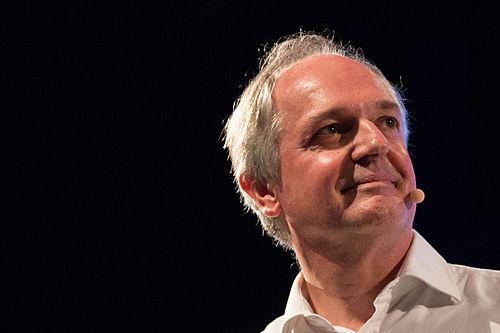
What changed: sustainability linked to business growth; pushing for purpose over short-term profit.
Paul Polman led Unilever from 2009 to 2019. During this decade:
-
He launched the Unilever Sustainable Living Plan, which set huge targets: for example, to decouple growth from environmental impact, improve health and well-being for billions, and source 100% of agricultural raw materials sustainably. Wikipedia
-
Under Polman, Unilever delivered returns well above many of its peers; it wasn’t just good branding — the business model was proving that sustainability could go hand in hand with profit. Wikipedia
After his time at Unilever, Polman co-founded organizations like Imagine (now part of Systemiq), focusing on systemic change — climate, inequality, poverty. Wikipedia
Why it matters: Polman challenged a central myth of business: that environment/social goals are a drag on profit. Demonstrated that with huge companies and supply chains, you can embed ethics into the core. That inspires other CEOs, investors, regulators.
4. Renat Heuberger — Terra Impact Ventures / South Pole

This one is less about huge auto giants and more about impact across many ecosystems.
What changed: climate action, nature tech, helping shift how businesses measure impact.
Renat Heuberger is CEO of Terra Impact Ventures, and earlier co-founded South Pole (a firm that helps businesses and governments reduce carbon emissions, among other climate services) and myclimate. Wikipedia
He’s been active since the late 1990s, pushing for impact investing, renewable energy, nature-based solutions, helping shape how climate risk and opportunity are understood financially. These kinds of firms are critical because policies and regulation move slowly: but markets respond faster to risk/return, so when CEOs, investors, consultants empower sustainability, it shifts incentives broadly.
Why it matters: the climate crisis isn’t waiting. Leaders like Renat provide tools, metrics, market-based leverage. They help shape the landscape we all live in — by making sustainability not just a moral choice but a business imperative.
5. Ndidi Okonkwo Nwuneli — One Campaign & African Food Changemakers

Because sometimes change starts where resources are less, but impact can be huge.
Ndidi Okonkwo Nwuneli became the CEO of ONE Campaign in 2024. Wikipedia
She is a long-time social entrepreneur, focused on agriculture, nutrition, and food systems in Africa. She co-founded or worked with multiple organizations aimed at improving food supply, reducing malnutrition, enabling small farmers to scale, better policies. Wikipedia
Why it matters: global change is not just led from Silicon Valley or Europe; change often has to happen in places where systems are fragile. CEOs like Ndidi link global resources, local knowledge, policy and business to pull big levers in places with less cushion.


Common Themes, Lessons From These CEOs
What do these leaders have in common? Because that’s where real change often hides—not in flashy announcements, but patterns. If you’re reading this, whether you want to be a leader, or run a business, or just understand what “good leadership” really looks like, these are the lessons.
-
Align profit with purpose
They didn’t treat social or environmental good as a side-project. It’s built into their strategy (e.g. GM’s EV investment, Unilever’s sustainable supply chains, Microsoft’s growth mindset that includes inclusion). -
Culture drives everything
Changing incentives, internal norms, what gets rewarded or punished—the “soft stuff”—was essential. If your team is competitive internally, if failure is punished harshly, innovation suffers. -
Long time horizons
These CEOs often commit to goals 5, 10, 20 years out. They accept that returns (financial or social) take time: investing for carbon neutrality, building new habits, transforming culture don’t happen overnight. -
Transparency and accountability
Whether in admitting mistakes (GM’s safety issues), or making public sustainability pledges, or measuring social/environmental impact, they often make commitments that can be tracked. This creates pressure, but also credibility. -
Risk & courage
It’s easier to stay with what’s working. These CEOs often stepped into uncomfortable territory: acquiring new businesses, shutting down or moving away from old ones, embracing innovation that might fail, pushing social goals when those were not universally popular. -
Scale matters—but local & small matters too
Big companies like Microsoft or GM shape infrastructure, markets, norms. Others like Ndidi or Renat show that in different contexts (local agriculture, climate markets), change can multiply. Both ends are needed.
Real-Data Challenges & Where Progress Is Mixed
To be honest: not all goals are met. CEOs make ambitious promises; sometimes the reality lags. Change is messy. Here are some of the friction areas:
-
GM’s EVs are growing, yes—but as of recently, EV sales are still a small slice compared to internal combustion cars, and scaling up has supply chain, cost, infrastructure, and regulation challenges. CNBC
-
Microsoft has been under scrutiny for layoffs, pressure on employees, debates around AI safety and ethics—that shows culture work is never “done.” The Times of India
-
Sustainability pledges can sometimes open firms to “greenwashing” criticisms. Meeting them requires investment, technological improvements, and often regulatory or market shifts that are outside a single CEO’s control.
Why These Stories Matter for You (Yes, You)
You’re reading this not just as a fan of big CEOs, but as someone who wants to improve, who cares about how influence, ethics, business, and impact intersect. What can we take?
-
If you become a leader (in business, social enterprise, whatever), prioritize impact and values. Big change starts when values guide decisions.
-
Be patient. If you want change, think long term. Culture, environment, social good don’t work on quarterly cycles.
-
Hold leaders accountable—not cynically—but by tracking promises and seeing if they follow through. Demand transparency.
-
Don’t underestimate the power of context: people like Ndidi Okonkwo Nwuneli show that local problems need local leadership. Big ideas matter, but adaptation is key.
Conclusion
It’s tempting to read about CEOs just as people who make money, move markets, or launch new gadgets. But the ones that deserve the headline “real changers” are those who have looked further: at what business owes society, what legacy means, how systems—corporate, environmental, social—can be rethought.
Satya Nadella reshaped Microsoft’s soul. Mary Barra is steering one of the oldest industrial giants into a cleaner future. Paul Polman connected global business with sustainability. Renat Heuberger and Ndidi Okonkwo Nwuneli show that change is possible not just at the top of massive corporations but also in markets and communities.
These CEOs don’t have perfect records (none of us do), but the direction they push in matters. And perhaps the most important lesson: if you want to change the world, start with what you can control—your values, your decisions, your work—and build from there.
If 5 Visionary CEOs Who Changed the World Forever inspired you, then you’ll absolutely love How to Build Discipline Like a CEO – It Actually Works! In that post, I’ve shared the real mindset and daily habits that the world’s top performers follow to stay unstoppable, no matter what challenges come their way.
But remember — no success begins outside of you. It all starts from your inner strength. So, take a few minutes to read 5 Learnings from Swami Vivekananda That Can Change Your Life. It will help you discover your purpose, find calm in chaos, and realize how powerful you already are inside.
And since your network truly equals your net worth, don’t skip Build Your Network for Real Wealth in 2025. It’s not just about meeting people — it’s about building meaningful connections that help you grow, learn, and create real success.
The journey to greatness always begins with one decision — to keep learning and keep moving. Start today.
Sushant Kumar
Founder
As a current B.Com (Hons) student at DU SOL and an active Chartered Accountancy (CA) aspirant, I understand the exact pressure, syllabus confusion, and administrative hurdles students face daily. TheSushant.in was built to provide first-hand, stress-tested guidance. Every DU SOL update, exam strategy, and CA study note shared here comes directly from my personal academic journey, official notifications, and real-time student experience. No generic advice: practical, student-to-student blueprints to help you clear your exams and level up.