- Why Many Students Are Suddenly Questioning Their Results
- CBSE’s Three-Step Process Is Drawing Attention
- The Fees Are Becoming the Biggest Flashpoint
- The Debate Around “Paying to Prove You’re Right”
- Students Are Also Confused About Mark Increases and Decreases
- Many Students Are Talking About the New Evaluation System
- Important Things Students Should Carefully Check
- Why This Issue Feels Bigger Than Just Marks
- What Students Should Expect Next
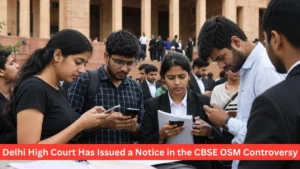
For many Class 12 students, the CBSE result season has not ended with relief. In fact, for a growing number of students, it has turned into another stressful phase — one where they now feel forced to spend money just to verify whether their answer sheets were checked properly in the first place.
Across social media platforms, student groups, and discussion forums, one frustration keeps repeating: “Why do students have to pay to prove someone else’s mistake?”
That question is now becoming the center of a much larger conversation around the CBSE post-result verification and revaluation process.
Why Many Students Are Suddenly Questioning Their Results
Ever since the Class 12 results were declared, many students have been expressing confusion over unexpectedly low marks. Some claim they performed consistently well throughout the year but still received scores far below expectations.
For students targeting DU admissions, CUET counselling, professional courses, or competitive exams, the concern feels much bigger than just marks on paper. Class 12 scores still influence confidence, opportunities, and future planning in multiple ways.
This is exactly why the discussion around “wrong checking” has spread so quickly online.
Several students now feel that even a small evaluation mistake can directly affect college chances, cutoffs, and long-term academic direction.



CBSE’s Three-Step Process Is Drawing Attention
One important detail that many students initially misunderstood is that CBSE has not allowed direct revaluation immediately after results.
Instead, students have to go through a multi-step process.
According to the official process:
- First, students must request scanned copies of their answer sheets
- Then they must personally identify possible checking issues
- Only after that can they apply for verification or revaluation
This structure has now become one of the most discussed parts of the entire system.
Many students are asking why they are expected to first investigate the mistake themselves before the board rechecks anything.
The Fees Are Becoming the Biggest Flashpoint
This is where frustration is increasing the most.
Students reportedly have to pay:
- ₹700 per subject for scanned answer sheets
- ₹500 for verification-related requests
- ₹100 per question for revaluation requests
For students checking multiple subjects, the total cost can rise quickly.
And that has triggered the main criticism now circulating online: students feel they are being charged money simply to prove that the evaluation process may have gone wrong.
Interestingly, many people are not just upset about the amount itself. The larger issue is psychological.
Students feel that if a mistake happened during checking, the burden of correcting that mistake should not financially fall on them.
The Debate Around “Paying to Prove You’re Right”
One argument repeatedly surfacing in discussions is about fairness.
Some students believe that if rechecking later confirms major marking errors, then at least the verification or revaluation fees should be refunded. Others feel the process should have been temporarily free considering the scale of complaints being discussed online.
This has become a growing concern especially among middle-class families where even small additional academic expenses matter.
The emotional reaction is also understandable for another reason.
Many students are already dealing with disappointment, confusion, and pressure after results. Being asked to pay again during that same phase has made the situation feel even more frustrating for some families.
Students Are Also Confused About Mark Increases and Decreases
Another line from the process has created hesitation among many students.
CBSE has clarified that marks may either increase or decrease after revaluation.
That single detail is now making many students nervous.
Some students who suspect checking mistakes are still avoiding revaluation because they fear losing marks instead of gaining them.
At the same time, teachers and experienced students are advising candidates not to panic unnecessarily. If answers were genuinely correct and marks were missed, students are being encouraged to calmly review scanned copies using the official marking scheme before deciding anything.
Many Students Are Talking About the New Evaluation System
Another interesting part of the discussion is linked to CBSE’s newer digital evaluation-related system.
The system was introduced with expectations of:
- better transparency
- reduced human error
- faster evaluation
- smoother paper checking
But after this year’s results, many students online are questioning whether those expectations were actually achieved in practice.
For some students, the issue is no longer just about individual marks. It is becoming a larger debate around trust in evaluation systems themselves.
Important Things Students Should Carefully Check
Several users were still confused about practical details related to the process.
According to the notification:
- the entire process is online
- late applications may get rejected
- students cannot directly jump to revaluation
- final revaluation results will be treated as final
One thing many students may overlook is checking whether:
- all answer sheet pages are visible
- supplementary sheets are included
- the scanned copy actually belongs to them
These small details are now being widely discussed among students preparing to apply.
Why This Issue Feels Bigger Than Just Marks
For many students, this situation is emotionally heavier than it may appear from the outside.
Board exams in India are not treated like ordinary tests. They often become tied to identity, family expectations, future plans, confidence, and social pressure.
That is why conversations around “wrong checking” rarely stay limited to technical procedures.
The feeling that students may need to spend money just to defend their own performance has made this issue feel deeply personal for many families.
And because thousands of students are discussing similar fears at the same time, the topic continues gaining attention instead of disappearing after result day.
What Students Should Expect Next
As verification and revaluation applications continue, many more students are expected to carefully review their scores and decide whether they want to enter the process despite the costs involved.
Some students may choose to move forward immediately. Others may avoid the risk entirely because of the fear of mark reduction.
But one thing is clear — the conversation around evaluation transparency, accountability, and student trust is unlikely to end quickly this year.
For now, students across the country are watching closely, comparing experiences, discussing answers, and trying to decide whether proving they deserved better marks is worth another round of stress, uncertainty, and expense.
Sushant Kumar
Founder
As a current B.Com (Hons) student at DU SOL and an active Chartered Accountancy (CA) aspirant, I understand the exact pressure, syllabus confusion, and administrative hurdles students face daily. TheSushant.in was built to provide first-hand, stress-tested guidance. Every DU SOL update, exam strategy, and CA study note shared here comes directly from my personal academic journey, official notifications, and real-time student experience. No generic advice: practical, student-to-student blueprints to help you clear your exams and level up.