

- From Smartphones to AI Wearables
- Why Students May Find AI Glasses Useful
- Study Assistance
- Engineering Projects
- Accessibility
- The Privacy Backlash
- Why Campuses and Sensitive Spaces Are Responding
- What Engineering Students Should Watch
- Battery Life
- On-Device vs Cloud AI
- Privacy Engineering
- Skills That Will Be in Demand
Artificial intelligence is rapidly moving beyond smartphones and into wearable devices. Companies like Meta and Samsung are betting that AI-powered smart glasses could become the next major computing platform, offering hands-free access to multimodal AI assistants, live translation, navigation, and contextual information.
The retail push is accelerating. Best Buy has begun rolling out dedicated Meta Lab @ Best Buy experiences in more than 50 stores, with larger expansion plans over time, allowing shoppers to try AI glasses before purchasing. At the same time, Samsung is preparing its Android XR smart glasses as part of its broader AI hardware strategy. (Best Buy Corporate News and Information)
However, as these devices become more common, they are also raising new questions about privacy, surveillance, and appropriate use in classrooms, exams, temples, workplaces, and other sensitive environments.
From Smartphones to AI Wearables
For more than a decade, smartphones have been our primary interface with the digital world.
Now the next shift appears to be:
- AI-powered smart glasses
- Always-available voice assistants
- Context-aware computing
- Screen-free interactions
- Multimodal AI
Instead of typing prompts, users simply look at an object and ask:
“What am I looking at?”
The AI can analyze the camera feed and respond almost instantly.
Modern AI glasses can assist with:
- Real-time translation
- Object recognition
- Navigation
- Reading signs
- Identifying landmarks
- Hands-free photography
- Voice-controlled reminders
Meta says its latest AI glasses are designed to better understand what users are seeing and support tasks such as live translation, navigation, calendar assistance, and contextual AI conversations. (About Facebook)
| Product | Title | Price | Rating | Buy |
|---|---|---|---|---|
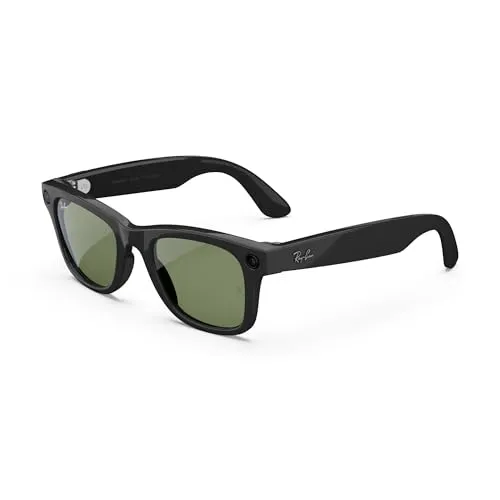 | Ray-Ban Meta (Gen 2), Smart AI Glasses Best Pick | ₹39900 | ★ 3.9/5 | Check Price |
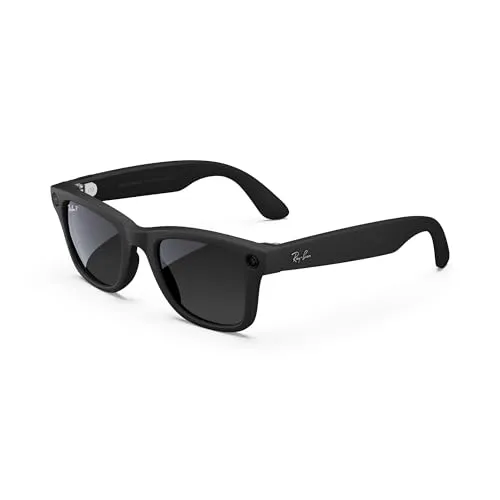 | Ray-Ban Meta (Gen 1) Smart AI Glasses | ₹24075 | ★ 3.4/5 | Check Price |


Why Students May Find AI Glasses Useful
For college students, wearable AI opens several practical possibilities.
Study Assistance
Students could:
- Read whiteboards hands-free
- Translate foreign-language textbooks
- Receive contextual explanations
- Organize notes with voice commands
Engineering Projects
Computer science students can experiment with:
- Computer vision
- OCR
- Voice interfaces
- Edge AI
- Spatial computing
- AR applications
Accessibility
Wearable AI also has strong potential for accessibility, helping users with scene descriptions, text reading, and navigation. Research prototypes have demonstrated these kinds of capabilities on AI smart glasses. (arXiv)
The Privacy Backlash
Despite the technological progress, AI glasses have become the center of growing privacy debates.
Recent criticism has focused on:
- Hidden or discreet cameras
- Recording people without consent
- Public surveillance concerns
- Social discomfort
- Attempts to bypass recording indicators
Meta has updated its software so that if the recording LED is covered or tampered with, the camera is automatically disabled. The company says this is intended to reinforce privacy protections. (About Facebook)
Even with those safeguards, many observers remain concerned about how AI glasses affect public trust and everyday social interactions. (Vox)
Why Campuses and Sensitive Spaces Are Responding
Many institutions are reviewing policies around wearable devices because smart glasses can include:
- Cameras
- Microphones
- AI assistants
- Live internet access
In settings such as:
- Examination halls
- Research laboratories
- Courtrooms
- Religious places
- Secure offices
these features can create legitimate concerns about unauthorized recording or information access.
Rules vary by institution and jurisdiction. Students should always follow the policies of their university, examination authority, or venue rather than assuming AI glasses are permitted.
What Engineering Students Should Watch
Behind the consumer product is a complex engineering challenge.
Battery Life
Running cameras, microphones, AI inference, and wireless connectivity in a lightweight frame requires careful power management.
On-Device vs Cloud AI
Manufacturers must decide:
- Which AI tasks run locally
- Which are processed in the cloud
- How to minimize latency while protecting user privacy
Privacy Engineering
Future devices will likely place greater emphasis on:
- Tamper-resistant recording indicators
- Secure hardware
- Permission management
- Encryption
- Privacy-preserving AI
These are becoming important areas for software, hardware, and embedded systems engineers.
Skills That Will Be in Demand
Students interested in wearable AI should consider learning:
- Computer Vision
- Embedded Systems
- Edge AI
- C++
- Python
- Spatial Computing
- Android XR
- Sensor Fusion
- Privacy Engineering
- Human–Computer Interaction (HCI)
As wearable computing evolves, these skills are likely to become increasingly valuable across consumer electronics and enterprise AI.
AI smart glasses are moving from experimental gadgets to mainstream consumer devices. With expanding retail availability, more capable multimodal AI, and growing interest from companies like Meta and Samsung, wearable AI could become an important part of everyday computing. At the same time, privacy expectations, campus rules, and responsible design will shape how quickly these devices are accepted. For students and developers, understanding both the technology and its societal impact will be just as important as learning to build it. (Best Buy Corporate News and Information)
Sushant Kumar
Founder
As a current B.Com (Hons) student at DU SOL and an active Chartered Accountancy (CA) aspirant, I understand the exact pressure, syllabus confusion, and administrative hurdles students face daily. TheSushant.in was built to provide first-hand, stress-tested guidance. Every DU SOL update, exam strategy, and CA study note shared here comes directly from my personal academic journey, official notifications, and real-time student experience. No generic advice: practical, student-to-student blueprints to help you clear your exams and level up.


