

- Direct Answer:
- Calculators Allowed to Use in Exam
- Official Rule / Policy of DU SOL Regarding Calculators
- Real Exam Centre Reality: What Actually Happens in DU SOL Exams
- 1. Most Centres Allow Basic Calculators
- 2. Scientific Calculators Often Get Rejected
- 3. Centre‑to‑Centre Variation Exists
- Why Scientific Calculators Are Usually Not Allowed
- 1. Fairness Across Streams
- 2. Focus on Conceptual Understanding
- 3. Risk of Stored Data
- Subjects Where Calculator Is Most Commonly Used in DU SOL
- Exceptions and Edge Cases You Should Know
- 1. Extremely Strict Centres
- 2. Confusion Between “Basic” and “Scientific”
- 3. First-Time DU SOL Students
- Safe Student Advice: What You Should Actually Carry
- 1. Carry a Basic Calculator Only
- 2. Recommended Safe Models
- 3. Do Not Carry Scientific Calculators
- What Happens If You Carry a Scientific Calculator?
- Scenario 1: Invigilator Allows It
- Scenario 2: You Are Asked to Keep It Outside
- Scenario 3: Confiscation for Exam Duration
- Should You Even Depend on Calculator Too Much?
- Common Student Doubts About Calculator in DU SOL Exam
- Is calculator allowed in all DU SOL exams?
- Can I carry two calculators?
- Can I share calculator with friend during exam?
- Can calculator memory be cleared?
- Practical Exam-Day Checklist for DU SOL Students
- Final Verdict: Is Calculator Allowed in DU SOL Exam?
- Bottom Line for DU SOL Students
- Where to Keep Phone During DU SOL Exam? (Complete Student Guide)
- What Happens Outside a DU SOL Exam Center? Real Student Experience Explained
- Can We Wear Shoes in DU SOL Exam Hall?
Is Calculator Allowed in DU SOL Exam?
If you are a DU SOL (Delhi University School of Open Learning) student, especially from Commerce, Management, or Economics backgrounds, this question naturally comes to mind before every exam: Is calculator allowed in DU SOL exam?
Some students hear “yes”, others hear “no”, and many get confused because of mixed experiences at different exam centres. This article explains the official rule, real exam centre reality, exceptions, and safe student advice — clearly, calmly, and without hype.
The goal is simple: reduce confusion and help you walk into the exam hall prepared, confident, and safe.
Get:
- Exam & assignment alerts
- Result and notice updates
- Study guides & PDFs
- Important student information
Direct Answer:
Yes, calculators are allowed in DU SOL exams.
However, only basic calculators are permitted. Scientific and advanced calculators are usually not allowed.
This small distinction is the reason behind most confusion and last‑minute panic among students.
Calculators Allowed to Use in Exam


Official Rule / Policy of DU SOL Regarding Calculators
As per the general examination instructions followed by DU SOL and Delhi University:
- Basic calculators are allowed in exams where numerical calculation is required.
- Scientific calculators, programmable calculators, graphing calculators, and advanced financial calculators are not permitted.
The logic behind this rule is simple:
- Basic arithmetic support → allowed
- Advanced computation, memory storage, formulas → not allowed
DU SOL exams are designed to test:
- Concept clarity
- Logical understanding
- Manual problem‑solving ability
Allowing scientific calculators would disturb this balance.
That is why only simple calculators are considered acceptable.
Real Exam Centre Reality: What Actually Happens in DU SOL Exams
Now comes the practical side — what really happens inside the exam centres.
1. Most Centres Allow Basic Calculators
In the majority of DU SOL exam centres:
- Students carrying basic calculators are allowed to keep and use them.
- Invigilators usually do a quick visual check.
If your calculator looks simple, compact, and basic, there is usually no issue.
2. Scientific Calculators Often Get Rejected
Students who bring:
- Scientific calculators
- Multi‑line display calculators
- Formula‑based calculators
- Calculators with large screens and many buttons
may face:
- Confiscation for the exam duration
- Instructions to keep it outside
- Forced manual calculation
This creates last‑minute stress, especially for students used to calculator support.
3. Centre‑to‑Centre Variation Exists
One important reality is that some variation exists across exam centres.
Reasons include:
- Different invigilators
- Different interpretation of rules
- Strictness level of the centre
That is why playing safe matters more than testing boundaries.
Why Scientific Calculators Are Usually Not Allowed
Many students ask: Why not allow scientific calculators when syllabus itself is tough?
Here is the clear reasoning:
1. Fairness Across Streams
DU SOL caters to:
- Commerce students
- Arts students
- Management students
- Economics students
Allowing advanced calculators would give extra advantage to students trained in using them.
2. Focus on Conceptual Understanding
Exams are structured to check:
- Logical steps
- Understanding of formulas
- Manual calculation skill
Scientific calculators reduce manual effort and shift focus away from concepts.
3. Risk of Stored Data
Some calculators allow:
- Formula storage
- Text notes
- Memory functions
This increases risk of unfair practices, which universities try to avoid.
Subjects Where Calculator Is Most Commonly Used in DU SOL
Although calculator permission applies generally, it becomes especially relevant in:
- Financial Accounting
- Corporate Accounting
- Cost Accounting
- Management Accounting
- Business Mathematics
- Statistics
- Economics numerical papers
In such subjects, basic calculators are practically necessary.
Trying to do long multiplications and divisions manually increases:
- Time pressure
- Calculation errors
- Mental fatigue
Hence, taking a basic calculator is both practical and sensible.
Exceptions and Edge Cases You Should Know
While the rule is clear, some edge cases still happen.
1. Extremely Strict Centres
In rare cases, some exam centres become over‑strict and may:
- Temporarily stop calculators
- Ask students to keep them outside
This usually happens due to:
- Misinterpretation of rules
- Fear of malpractice
Such situations are uncommon but not impossible.
2. Confusion Between “Basic” and “Scientific”
Some calculators sit in a grey zone — not fully scientific but more than basic.
These may sometimes be rejected.
Hence, simple single‑line display calculators are safest.
3. First-Time DU SOL Students
New students often:
- Carry school‑time scientific calculators
- Assume all calculators are allowed
This leads to unnecessary stress.
Understanding the exact allowed type prevents this.
Safe Student Advice: What You Should Actually Carry
To avoid confusion, stress, and last‑minute trouble, follow this safe approach.
1. Carry a Basic Calculator Only
Your calculator should:
- Have simple arithmetic functions
- Single‑line display
- No scientific buttons
- No formula features
2. Recommended Safe Models
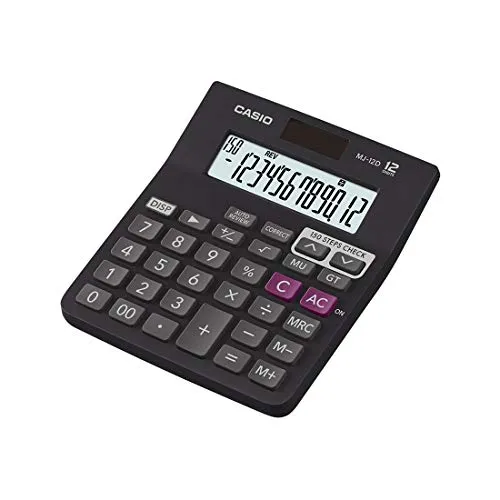
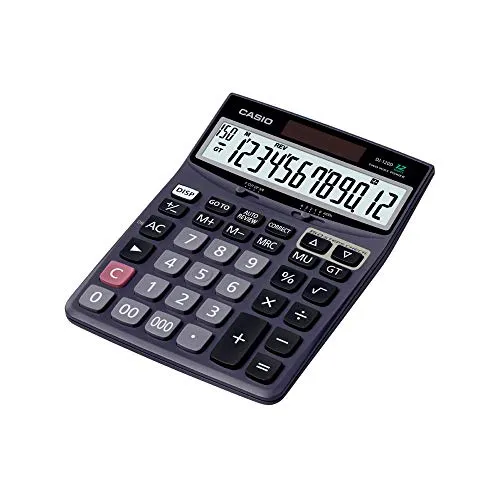
Two models that are widely considered safe and exam‑friendly:
- Casio MJ‑12D
- Casio MJ‑120D
These calculators:
- Are basic
- Have clean layout
- Are widely accepted
- Do not raise suspicion
3. Do Not Carry Scientific Calculators
Even if your friend says:
“My centre allowed it last time”
Do not take risk. Centre rules and invigilators change.
One small decision can impact your entire exam experience.
What Happens If You Carry a Scientific Calculator?
Let us be realistic about consequences.
If you bring a scientific calculator:
Scenario 1: Invigilator Allows It
This is rare but possible.
However, relying on this luck is not smart planning.
Scenario 2: You Are Asked to Keep It Outside
This is the most common case.
Now suddenly:
- You have no calculator
- You panic
- You waste time
- Your accuracy drops
Scenario 3: Confiscation for Exam Duration
Some centres keep confiscated items until exam ends.
This adds:
- Mental distraction
- Unnecessary tension
Hence, why risk it when safe options exist?
Should You Even Depend on Calculator Too Much?
This is an important mindset check.
While calculators help, over‑dependence is risky.
You should be comfortable with:
- Basic multiplication
- Division
- Percentages
- Simple interest calculations
If calculator stops working or is disallowed, you should still be able to manage reasonably.
Hence, practice:
- Manual calculations
- Approximation skills
- Speed arithmetic
This builds exam confidence.
Common Student Doubts About Calculator in DU SOL Exam
Is calculator allowed in all DU SOL exams?
Yes, basic calculators are allowed in numerical subjects. But irrelevant in theory‑only papers.
Can I carry two calculators?
Not advisable. Carry only one basic calculator.
Can I share calculator with friend during exam?
Usually not allowed. Each student must carry their own.
Can calculator memory be cleared?
Yes. Always clear memory before exam to avoid suspicion.
Practical Exam-Day Checklist for DU SOL Students
Before leaving for exam centre, ensure:
- Basic calculator only
- Extra batteries if required
- Admit card
- ID proof
- Transparent pen pouch
Avoid carrying:
- Scientific calculators
- Smartwatches
- Notes
- Extra electronic devices
This ensures smooth entry and peaceful exam environment.
Final Verdict: Is Calculator Allowed in DU SOL Exam?
Yes, calculator is allowed in DU SOL exams — but only basic calculators.
Scientific calculators create unnecessary risk and stress. Safe students always carry simple, basic calculators like Casio MJ‑12D or Casio MJ‑120D.
Understanding this clearly helps you:
- Avoid last‑minute confusion
- Stay mentally calm
- Focus fully on writing the paper
In competitive academic life, clarity and preparation matter more than shortcuts.
Bottom Line for DU SOL Students
Take a basic calculator.
Avoid scientific models.
Do not experiment on exam day.
Simple rule — Simple calculator = Safe exam experience.
If you want similar clear explanations on DU SOL exams, CA Foundation, B.Com (Hons), and real student issues, you can explore our detailed guides.
Where to Keep Phone During DU SOL Exam? (Complete Student Guide)
What Happens Outside a DU SOL Exam Center? Real Student Experience Explained
Can We Wear Shoes in DU SOL Exam Hall?
Sushant Kumar
Founder
As a current B.Com (Hons) student at DU SOL and an active Chartered Accountancy (CA) aspirant, I understand the exact pressure, syllabus confusion, and administrative hurdles students face daily. TheSushant.in was built to provide first-hand, stress-tested guidance. Every DU SOL update, exam strategy, and CA study note shared here comes directly from my personal academic journey, official notifications, and real-time student experience. No generic advice: practical, student-to-student blueprints to help you clear your exams and level up.


