- Why This Article Matters
- 1. First Impression Outside the Exam Centre
- What the Crowd Looked Like
- Mode of Transport
- Dress & Appearance
- Parents at the Centre
- 2. Bag, Mobile Phone & Security Confusion
- The Main Anxiety
- What Actually Happened Here
- Practical Consequence
- 3. Roll Number & Seating Plan Confusion
- Outside the Center
- Smarter Approach
- Practical Tip
- 4. Talking to Other Students – Reality Check
- Academic Background
- Skill Development
- 5. First-Day Confusion for New Students
- 6. Entry Time & Late Entry Reality
- Actual Entry Time
- Important Observation
- Practical Consequence
- 7. Inside the Classroom: Instructions & Checking
- Bag Placement
- Final Security Instructions
- 8. Question Paper Distribution & Exam Process
- 9. Duration vs Actual Writing Time
- Official Duration
- My Actual Time
- Important Observation
- 10. Exit Process & After-Exam Reality
- 11. Common Problems Students Face at DU SOL Exam Centres
- 1. Last-Minute Confusion
- 2. Bag & Mobile Anxiety
- 3. Late Arrival
- 4. Overcrowding
- 12. Practical Tips for DU SOL Exam Day
- Before Leaving Home
- Reaching the Centre
- At the Centre
- 13. Final Thoughts
- Summary in Short
- Also Read:
- DU SOL PRAGYAN PORTAL: Your Complete Guide
- DU SOL Passing Criteria 2026: Passing Marks, Fail Conditions
This article documents the real, on-ground experience outside and inside a DU SOL exam centre. The purpose is simple: to show students what actually happens on exam day, reduce unnecessary anxiety, and help first-time candidates make informed decisions.
This is not a motivational post, not a coaching guide, and not an official instruction page. It is a grounded, practical account written for students who want clarity about the DU SOL exam-day environment.
The experience shared here is based on the Business Laws exam at Faculty of Arts, South Delhi, but most observations apply to DU SOL exam centres in general.
Get:
- Exam & assignment alerts
- Result and notice updates
- Study guides & PDFs
- Important student information
Why This Article Matters
Many students prepare academically, but very few know what the actual environment outside the exam centre looks like. This lack of clarity often causes:
- Unnecessary nervousness
- Last-minute confusion
- Poor decision-making
- Avoidable stress
Understanding the real situation on exam day helps students:
- Reach the centre at the right time
- Carry correct items
- Avoid panic
- Stay mentally calm
This article focuses on reality, not assumptions.


1. First Impression Outside the Exam Centre
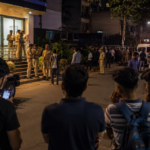
When I reached the Faculty of Arts, South Delhi, the first thing that stood out was the large crowd of students outside the main gate.
What the Crowd Looked Like
- Many students were standing without clear direction.
- A lot of them seemed unsure about where to go.
- Most people were standing simply because others were standing there.
Mode of Transport
Students arrived using different transport options:
- Auto and taxi
- Rapido bike taxi
- Metro + walking
Due to the heavy crowd, traffic started building up on the road outside the centre. This is important to note, because traffic delays can easily make students late if they arrive close to exam time.
Dress & Appearance
One noticeable thing was that most students were well-dressed. Everyone seemed to treat exam day seriously. This creates a formal environment and adds psychological pressure, especially for first-time students.
Parents at the Centre
Some students had come with their parents. This is common, especially for:
- First-time candidates
- Younger students
- Students unfamiliar with the area
There is no restriction on parents waiting outside, but they are not allowed inside the exam building.
2. Bag, Mobile Phone & Security Confusion
This is one of the biggest confusion points for DU SOL students.
The Main Anxiety
Most students worry about:
- Where to keep their bag
- Whether mobiles will be confiscated
- Whether any locker facility is provided
Different exam boards have different rules. For example, in CBSE exams, mobile phones are strictly not allowed inside, and no deposit facility is provided. Because of this, many students feel nervous.
What Actually Happened Here
At this DU SOL centre:
- Students were allowed to keep their bags outside the classroom.
- Mobile phones were kept inside the bag, which was placed outside the exam hall.
- There was no formal locker system.
This system is based on mutual trust and basic supervision, not strict enforcement.
Practical Consequence
- There is some risk involved, as bags are kept outside.
- However, since everyone is in the same situation and guards are present, major issues are rare.
Best practice:
Carry minimum valuables. Bring only:
- Admit card
- ID proof
- Pen
- Some cash
Avoid carrying expensive phones or wallets.
3. Roll Number & Seating Plan Confusion
Outside the Center
Near the guard room, a roll-number-wise seating plan sheet was pasted. Many students gathered around it, causing:
- Heavy crowd
- Pushing
- Confusion
- Delays
Smarter Approach
Instead of standing in the crowd, I went directly to the main examination building. There, I found the same seating plan pasted clearly on the ground floor.
This made it easier to:
- Find my room
- Avoid unnecessary crowd
- Save time
Practical Tip
If the seating plan is crowded near the gate, check inside the building as well. Most centres paste the same list in multiple locations.
4. Talking to Other Students – Reality Check
Before entering the exam hall, I spoke to a few students.
Academic Background
- One student had the same Business Laws exam.
- He was from B.Com (Hons), 1st semester.
Skill Development
Another student shared that he was learning Tally and Excel alongside his degree.
This highlights an important trend:
Many students are now combining college education with practical skill learning, which improves employability.
5. First-Day Confusion for New Students
Since this was my first visit to the centre, I asked a few students whether the system was the same on previous days.
They said they had appeared the previous day as well, and the process was similar.
This was helpful because:
- It confirmed that the system was stable
- Reduced uncertainty
If it is your first exam, expect some confusion. This is normal. The system becomes clear after the first day.
6. Entry Time & Late Entry Reality
Actual Entry Time
Students started entering around 1:57 PM for a 2:00 PM exam.
Important Observation
- Many students were still outside at 1:55 PM
- Some were searching for rooms
- Some were still checking roll numbers
Practical Consequence
Arriving late increases:
- Panic
- Mistakes
- Stress
Safe strategy: Reach the centre at least 30 minutes before exam time.
7. Inside the Classroom: Instructions & Checking
Once inside the classroom:
Bag Placement
- Teacher/Professor instructed students to keep all bags outside the classroom.
Final Security Instructions
Teachers announced (in a strict tone) that students should not carry:
- Loose papers
- Any written material
They clearly warned that if any suspicious material is found, the exam could be cancelled.
This announcement created a serious environment and ensured discipline.
8. Question Paper Distribution & Exam Process
- Question papers were distributed
- Answer sheets were provided
- Instructions were repeated
The environment inside the exam hall was:
- Quiet
- Serious
- Focused
9. Duration vs Actual Writing Time
Official Duration
- Total exam time: 3 hours
My Actual Time
- Completed in 1.5 hours
Important Observation
DU SOL exams generally:
- Have moderate difficulty
- Focus more on theoretical understanding
Many students may finish early. If your paper is complete and rechecked, you are allowed to leave early.
10. Exit Process & After-Exam Reality
After submitting the paper:
- Students were allowed to leave immediately
- There was no waiting period
I collected my bag and walked to Durgabai Deshmukh Metro Station, which is approximately 0.8 km from the exam centre.
This walking distance is manageable, but:
- In summers, it may feel tiring
- Comfortable footwear is recommended
11. Common Problems Students Face at DU SOL Exam Centres
1. Last-Minute Confusion
Due to lack of clarity, students often:
- Stand in wrong queues
- Waste time searching for rooms
2. Bag & Mobile Anxiety
Fear of confiscation creates stress. In most DU SOL centres, bags are kept outside the room, not seized.
3. Late Arrival
Late arrival increases:
- Mental pressure
- Risk of missing instructions
4. Overcrowding
Large crowd outside gates can create:
- Panic
- Noise
- Disorientation
12. Practical Tips for DU SOL Exam Day
Before Leaving Home
- Carry admit card
- Carry ID proof
- Carry 2–3 pens
- Keep minimal cash
- Avoid carrying expensive items
Reaching the Centre
- Reach 30 minutes early
- Avoid peak traffic hours
At the Centre
- Look for seating plans inside buildings
- Do not panic
- Follow instructions calmly
13. Final Thoughts
DU SOL exam centres are not strict like CBSE board centres, but they are also not casual environments.
The system is based on:
- Basic discipline
- Student responsibility
- Simple supervision
Understanding the ground reality helps students:
- Stay calm
- Avoid confusion
- Perform better
If this is your first DU SOL exam, expect some nervousness. It is normal. After one paper, the entire process becomes familiar.
Summary in Short
- Reach early
- Carry minimum items
- Expect crowd
- Follow instructions
- Do not panic
This article aims to give a real, practical picture of what happens outside and inside a DU SOL exam centre, so students can prepare mentally and logistically.
If you are appearing for DU SOL exams, understanding this reality will help you avoid unnecessary stress and confusion.
Also Read:
DU SOL PRAGYAN PORTAL: Your Complete Guide
DU SOL Passing Criteria 2026: Passing Marks, Fail Conditions
Sushant Kumar
Founder
As a current B.Com (Hons) student at DU SOL and an active Chartered Accountancy (CA) aspirant, I understand the exact pressure, syllabus confusion, and administrative hurdles students face daily. TheSushant.in was built to provide first-hand, stress-tested guidance. Every DU SOL update, exam strategy, and CA study note shared here comes directly from my personal academic journey, official notifications, and real-time student experience. No generic advice: practical, student-to-student blueprints to help you clear your exams and level up.